Radiation

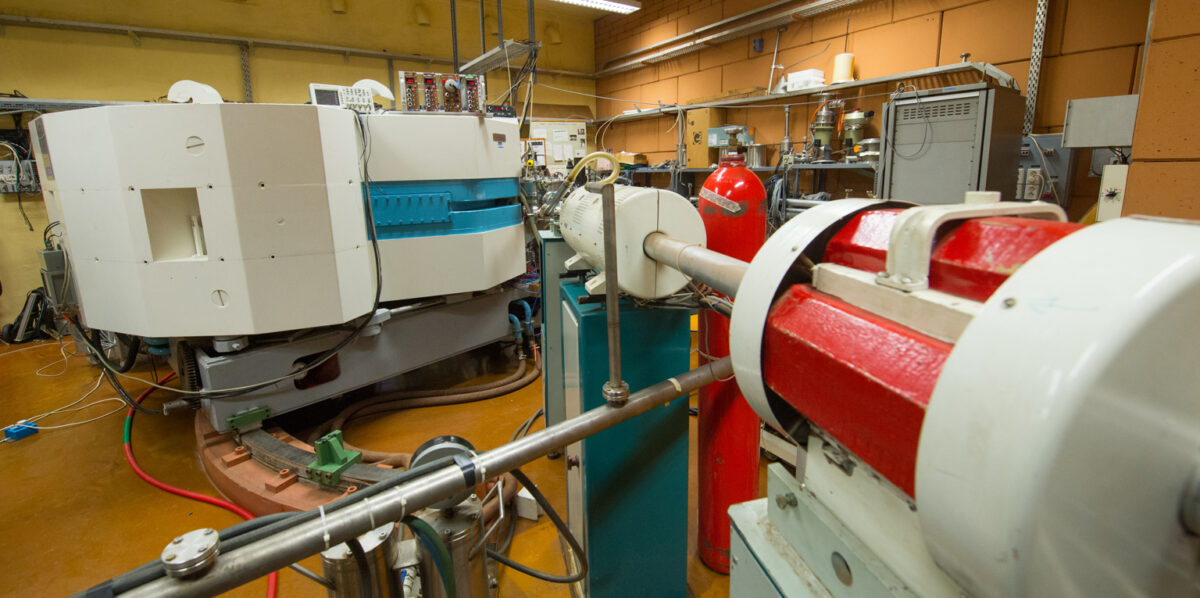
ATOMKI has gained specialized expertise in radiation physics, various forms of radiation applications such as ion sources, ion-beam implantation or development of radiation detectors.
Our accelerator facilities, ion sources and high-activity radiaoactive sources support a wide range of academic studies, advancing both the theoretical understanding and the practical development in radiation physics. Primarily, nuclear studies at ATOMKI routinely involved a large set radiation detectors, most of which were developed locally. Radiation safety and dosimetry require the use of detectors, typically for the continuous monitoring of gamma rays and neutrons, but controlling radioactive substances and identifying occasional contamination are also essential in our laboratories.
  • Recent activities involve:
    radiation detection for nuclear studies and dosimetry
  • radiation hardness tests of electronic devices
  • ion implantation for surface modification
  • ion-beam scattering techniques for surface analytics

Nuclear processes

ATOMKI employs its specialized accelerator center to lead international nuclear research and develop new technologies for energy, space, and health industry.
ATOMKI’s engagement in nuclear research and technology development is driven by its mission to advance fundamental science while addressing global challenges in energy, space, and health sectors. As Hungary’s primary competence center for nuclear physics, the institute provides relevant data for modeling nuclear processes and supports national infrastructure, such as the Paks Nuclear Power Plant. Beyond academic research, ATOMKI employs its unique accelerator facilities to develop innovative technologies, including radiation-hardened electronics for space and new detectors for medical imaging or space research.

Radioluminescence

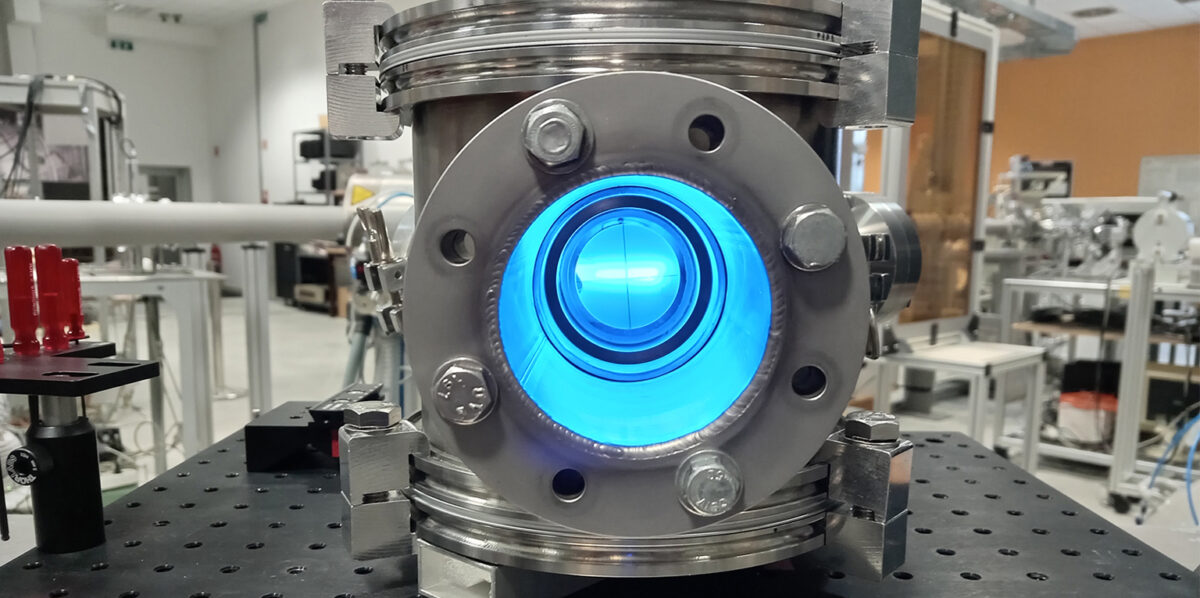
Understanding radioluminescence and underlying electronic processes is key to developing high-performance scintillators and durable detector materials for extreme environments.
Studying radioluminescence and underlying optoelectronic processes is essential for developing the next generation of scintillaotr materials and other high-efficiency lighting devices. By understanding charge carrier mobility and exciton dynamics, we can control subprocesses of energy transport and recombination to minimize losses and maximize brightness. Analyzing relaxation and decay processes is particularly important for high-fidelity spectroscopy with improved energy and timing resolution, energy linearity. These insights also help in engineering materials that can survive the harsh radiation environments of outer space.