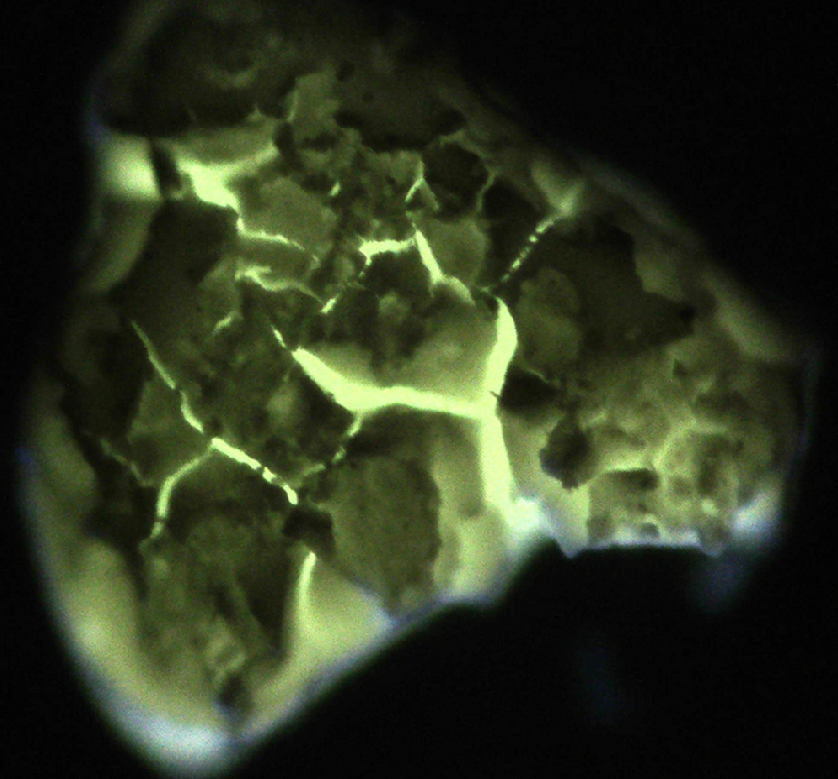
The ability to detect radiation in the harsh and unfriendly environment of space is critical for both human and non-human missions. In space, radiation can not only affect the health of the astronaut crew but also have a negative effect on the behavior of the equipment. The detection systems must be characterized by compactness, energy efficiency, and robustness. The majority of this problem can be resolved through the utilization of existing detector technologies, which are predominantly associated with nuclear and particle physics and nuclear medicine. However, special requirements, such as low weight but high volume, call for new ideas. One such possibility is the use of new materials, in this case glass-based composites, which in theory meets these requirements but has not yet been tested in practice. The objective of our activity is to investigate whether space-like radiation environments change the properties of a functionalised materials, assessing their potential as radiation detectors in space applications.